

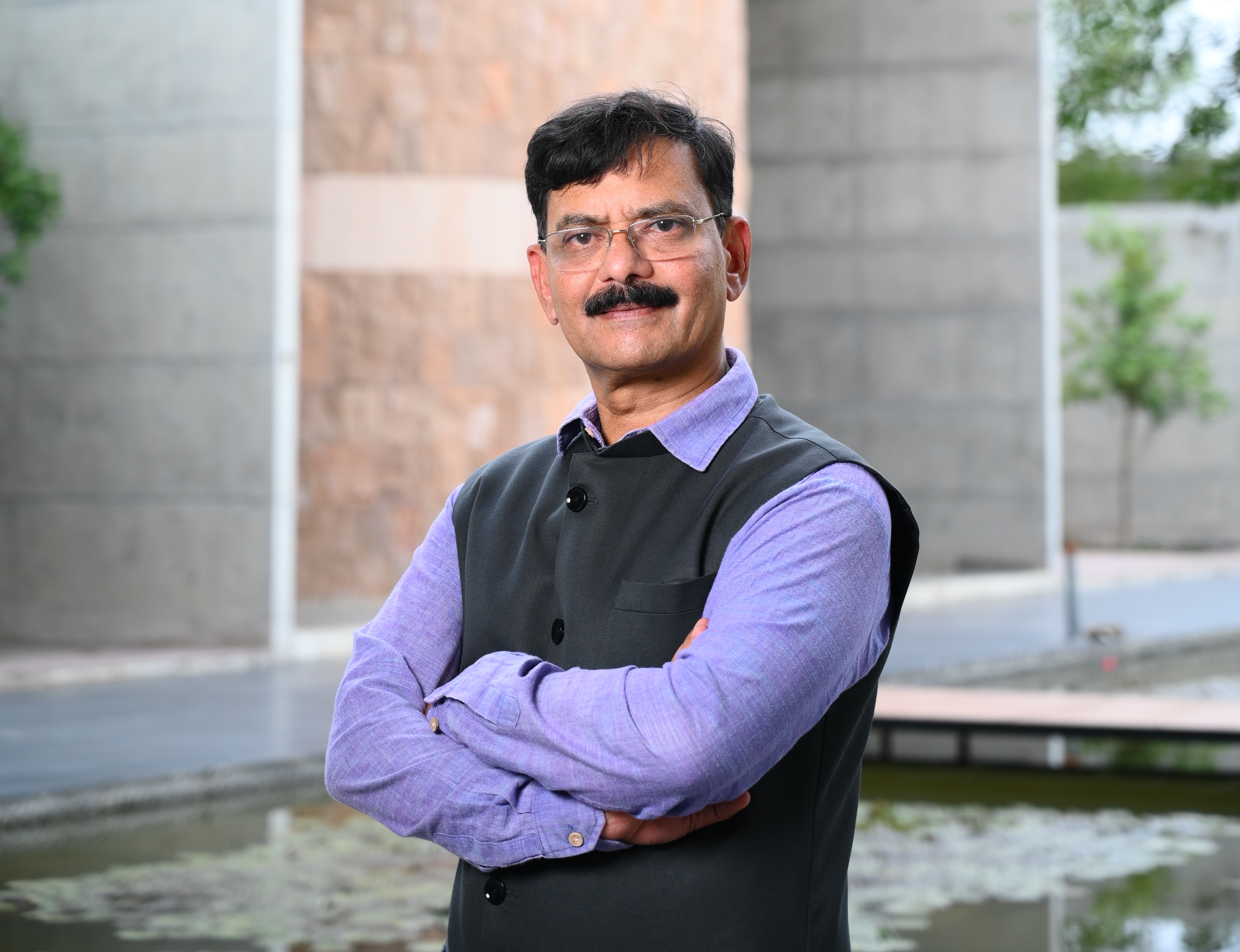
Drones World Editor Kartikeya in Conversation with Avinash Punekar, CEO, iCreate
iCreate has emerged as one of India’s leading deep-tech incubation platforms. How is iCreate supporting startups in the drone and autonomous systems sector, particularly in helping them move from prototype development to commercialization?
At iCreate, we recognise that the real challenge for deep-tech startups—especially in drones and autonomous systems—is not just innovation but translating that innovation into commercially viable products.
We support startups across this journey through a high-touch, end-to-end ecosystem. This includes access to advanced prototyping labs, structured acceleration programs, and deep technical mentorship. Our dedicated drone lab is equipped with specialised testing infrastructure such as thrust stands, endurance and payload testing systems, 6-axis vectoring rigs, and portable motor testing setups, along with access to critical components like motors, propellers, and frames—enabling startups to rigorously test and refine their systems in-house.
Additionally, iCreate’s campus is located in a designated green zone, allowing startups to conduct unrestricted flight testing, which is a significant advantage in accelerating real-world validation and iteration.
Initiatives like the iCreate Drone Challenge are designed to push startups beyond proof-of-concept by focusing on real-world performance benchmarks such as speed, payload, and endurance, and by connecting them with industry, investors, and government stakeholders.
At iCreate, where we have supported over 912 innovations and enabled 60+ patents, we have seen that structured access to infrastructure, mentorship, and market connects can significantly accelerate the journey from TRL 4 to TRL 7 and beyond.
India’s drone ecosystem has expanded rapidly over the past few years. From the perspective of iCreate, what are the key factors driving this growth and what gaps still need to be addressed?
India’s drone ecosystem has seen remarkable growth, driven by progressive policy frameworks, increasing sectoral adoption, and a strong pipeline of engineering talent and startups.
However, there are still critical gaps that need attention. We need to further strengthen the indigenous component ecosystem, especially in areas like propulsion systems, sensors, and advanced avionics. Access to testing infrastructure and certification pathways must expand, and deeper collaboration between industry, academia, and startups will be essential to sustain long-term innovation.
Deep-tech startups often face challenges in accessing capital, testing infrastructure, and industry partnerships. How does iCreate help drone startups overcome these barriers and scale their technologies?
Deep-tech startups inherently face longer gestation cycles, making access to capital and infrastructure critical.
At iCreate, we address this through a combination of funding access, infrastructure, and ecosystem connections. Startups benefit from our investor network, including angels, VCs, and strategic partners. Through platforms like the iCreate Drone Challenge, startups also get access to a dedicated funding pool of ₹2 crore, along with a fully supported prototype acceleration programme with support valued at ~₹6 lakh per team.
We also provide state-of-the-art labs and rapid prototyping facilities, enabling startups to iterate faster. This is complemented by domain-specific facilities like our drone lab, which allows startups to validate key performance parameters such as thrust, endurance, and payload capacity before moving to real-world deployments. A key advantage is our green-zone campus, which enables startups to carry out frequent, unrestricted flight testing, significantly reducing iteration cycles and regulatory friction. Alongside this, we facilitate pilot deployments with industry and government bodies, helping startups validate, refine, and scale their solutions.

With the government’s push for Atmanirbhar Bharat in drone technology, how is iCreate contributing to building indigenous capabilities in UAV design, AI, and advanced aerial platforms?
The vision of Atmanirbhar Bharat in drone technology aligns deeply with our mission at iCreate.
Through initiatives like the iCreate Drone Challenge and programs such as ProtoQuik Launchpad, we are actively promoting component indigenisation across propulsion systems, energy solutions, avionics, sensors, and materials. These platforms are designed to not only identify innovation but also accelerate it through structured prototyping, validation, and market access.
A growing number of iCreate portfolio startups are already working on indigenous drone components such as flight controllers, propulsion systems including motors and propellers, fuel cells, navigation and communication systems, and lightweight airframes—contributing to a self-reliant and globally competitive drone ecosystem.
In parallel, we are supporting innovation in AI-driven autonomy, secure communication, and advanced aerial platforms, ensuring that Indian startups are not just participants, but leaders in the global drone ecosystem.
iCreate works closely with startups across multiple technology sectors. What key qualities or capabilities do you look for in founders developing next-generation drone or aerospace technologies?
In deep-tech sectors like drones and aerospace, we look beyond just the idea.
We prioritise founders who demonstrate strong technical depth, problem clarity, and execution capability. Given the complexity of these systems, an interdisciplinary mindset—combining aeronautics, electronics, AI, and systems engineering—is critical.
Equally important is resilience and long-term commitment, as deep-tech innovation requires patience and persistence. Founders who are open to feedback, willing to iterate, and focused on solving real-world problems tend to stand out.
Drone applications are expanding across sectors such as agriculture, logistics, defence, and infrastructure inspection. Which of these areas do you believe will see the most disruptive innovation from startups incubated at iCreate?
We see strong disruption potential across multiple application sectors such as agriculture, infrastructure inspection, logistics, and defence.
However, an equally important focus at iCreate is on startups building core subcomponents and subsystems—including flight controllers, propulsion systems like motors and propellers, navigation, communication, and autonomy stacks.
These are foundational technologies that power the entire drone ecosystem. Our vision is for iCreate startups to become the “intelligence and performance layer” within drone systems—much like an “Intel Inside” for drones—enabling global OEMs and platforms with high-quality, indigenous technologies.
Over time, this approach will not only strengthen India’s position in drone applications but also establish it as a global hub for critical drone technologies.
Many drone startups struggle to transition from innovation to scalable manufacturing. What role can innovation hubs like iCreate play in building stronger industry partnerships and manufacturing ecosystems?
One of the biggest challenges for drone startups is moving from innovation to manufacturing at scale.
Innovation hubs like iCreate play a critical role by acting as bridges between startups and industry. We facilitate partnerships with manufacturing players, component suppliers, and system integrators, enabling startups to access established supply chains.
Our partnerships with leading institutions and organisations such as CSIR further strengthen this ecosystem by providing startups access to advanced R&D support and validation environments. We also support startups in design for manufacturability, vendor development, and quality systems, which are essential for scaling from prototypes to production-ready solutions.
Looking at the global landscape, how can iCreate help Indian drone startups access international markets and build partnerships with global aerospace and technology companies?
At iCreate, we strongly believe that Indian startups should think global from day one.
We enable this through international partnerships, cross-border programs, and exposure to global ecosystems. Our engagement with global institutions and participation in international platforms allows startups to connect with aerospace companies, technology partners, and investors worldwide.
Additionally, we support startups in product positioning, regulatory understanding, and market entry strategies, ensuring they are well-prepared to compete in international markets.
As autonomous technologies continue to evolve, how do you see iCreate shaping the next generation of innovators in drones, robotics, and advanced mobility over the next decade?
At iCreate, our vision is to build a future-ready ecosystem that nurtures innovators across high-impact deep-tech sectors—mobility, climate tech, health tech, and aerospace & defence.
A key step in this direction is the evolution of our EV Centre of Excellence into a broader Mobility Centre of Excellence – SWARG (Space | Water | Air | Rail | Ground). Through SWARG, we are expanding our focus to encompass the full spectrum of mobility technologies, enabling innovation across multiple domains of transportation.
While we will address these domains selectively—guided by expert inputs, national priorities, market needs, and funding availability—the underlying approach is deeply interconnected. Many core technologies such as energy systems, autonomy, advanced materials, and control systems cut across these domains, creating strong opportunities for cross-sector innovation and knowledge transfer.
By combining this cross-domain approach with hands-on prototyping infrastructure, sector-focused programs, and global partnerships, we aim to enable startups to build scalable, globally relevant solutions.
Ultimately, our goal is not just to incubate startups, but to shape next-generation deep-tech enterprises that will define the future of mobility, autonomous systems, and intelligent technologies—positioning India as a global leader in this space.
