


Agris Kipurs, CEO and co-founder at Origin Robotics:
Origin Robotics has begun delivering the BLAZE interceptor only months after contract announcements—what internal capabilities enabled such rapid operational delivery?
What sets Origin Robotics apart is that BLAZE is a complete, field-ready capability, not a development project. Customers are procuring an operational system that can be delivered immediately, rather than funding a program that begins after contract award. Our R&D has consistently stayed ahead of demand; we do not wait for requirements to be defined before building capability. BLAZE has been purpose-built and refined over several years, shaped by real operational experience, including an R&D contract awarded by Latvia already in 2025 and multiple successful demonstrations.
Because we have been working on the project for a considerable time and anticipated demand, and because orders are structured in multiple batches, we were prepared to deliver the first units quickly after contract announcement.
Latvia, Belgium, and Estonia are the first in Europe to field a fully autonomous, warhead-equipped interceptor drone—what does this signal about the shift in European air-defence thinking?
It signals realism and urgency. One of the defining challenges in modern conflict is asymmetric cost. A loitering munition such as the Shahed-type drone is relatively inexpensive to produce and deploy, while intercepting it with a high-end air defence missile can be dramatically more expensive—often by an order of magnitude. This imbalance places sustained pressure on even well-resourced defence systems.
Defence planners recognize that countering mass, low-cost aerial threats requires solutions that are fast to deploy, scalable in large quantities, and economically sustainable over time. Autonomous interceptors introduce a new layer within air defence designed specifically for this environment. They prioritize speed, adaptability, and cost efficiency, enabling forces to respond to swarms and repeated attacks without exhausting strategic assets. Rather than replacing traditional systems, they complement them.
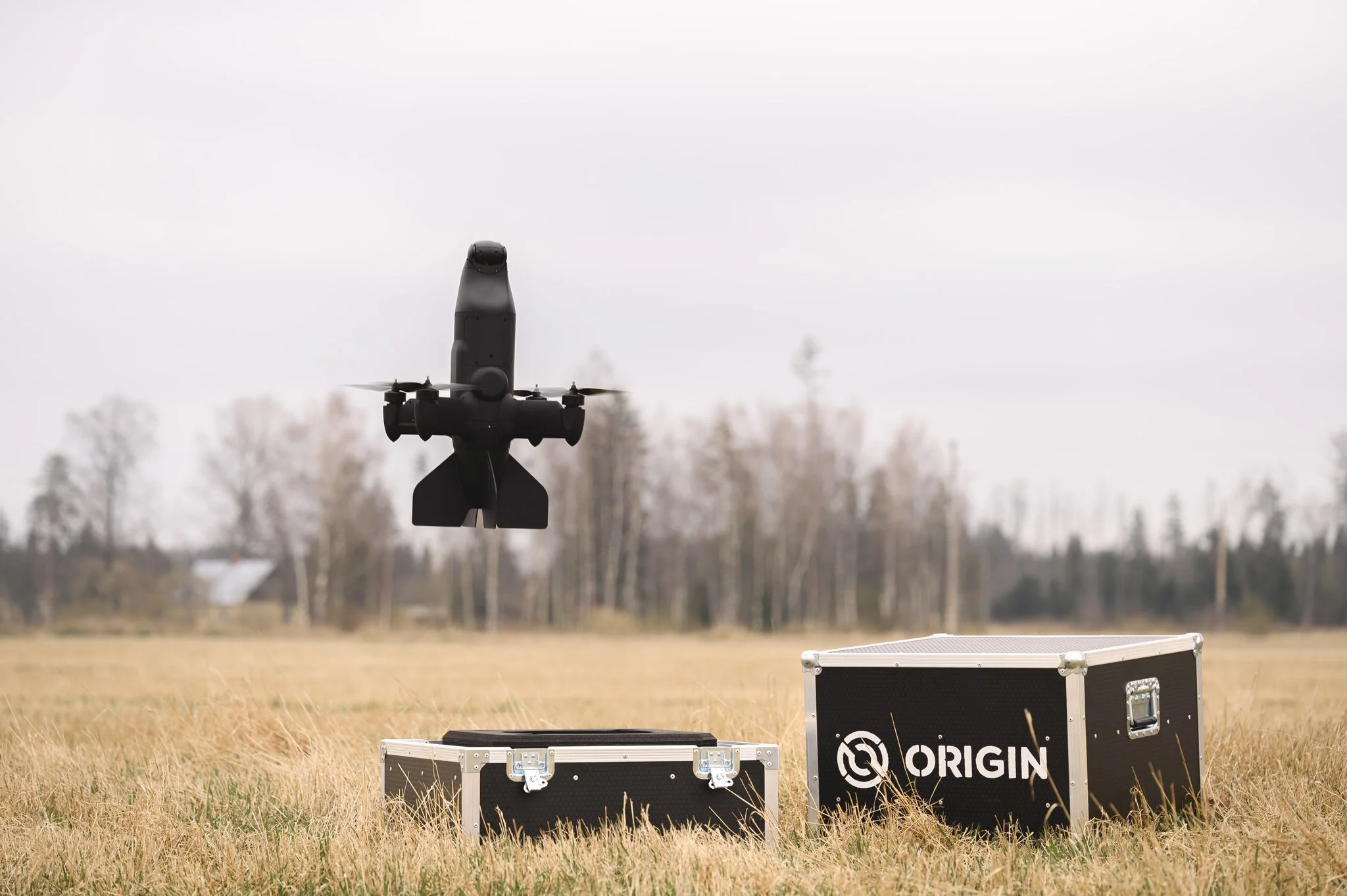
How important was NATO codification and STANAG compliance in accelerating adoption of the BLAZE system across multiple countries?
Interoperability matters. NATO codification and alignment with relevant STANAG standards reduce friction in procurement, logistics, and integration. For us, it is not a marketing label but a practical enabler. It builds institutional confidence that the system can integrate within existing structures.
With unauthorized drone activity rising across NATO’s eastern flank, how do you see autonomous interceptor drones fitting into layered counter-UAS and air-defence architectures?
They provide a high-speed response layer within that architecture. Interceptors like BLAZE are particularly relevant when non-kinetic measures are insufficient or when reaction time is critical. However, impact depends on integration. Interceptors must be properly cued by sensor networks and aligned with command structures.
The BLAZE programme contrasts sharply with traditional multi-year defence procurement cycles—what changes are needed for governments to consistently adopt faster acquisition models?
Counter-UAS is a rapidly evolving domain; acquisition models must reflect that pace. Shorter evaluation cycles, phased contracts, and structured feedback loops enable faster capability deployment without sacrificing oversight. Speed does not mean cutting corners. It means aligning requirements, testing, and industrial capacity around measurable operational outcomes instead of static paperwork processes.
As national evaluation and integration processes are underway, how does Origin ensure that autonomous systems translate effectively into real-world tactics and doctrine?
Technology alone does not create capability. We work closely with end users to ensure the system integrates into their operational frameworks. This includes training and structured feedback loops. Lessons learned, including those from the Ukrainian battlefield, are incorporated through controlled updates.
The hardware architecture of BLAZE has remained stable since launch, with incremental refinements based on operational feedback. Software development, however, is continuous. As with any modern autonomous system, updates and improvements are ongoing, managed under disciplined release processes.
With further NATO and partner-nation deliveries already in progress, how is Origin Robotics managing rapid scaling while maintaining operational reliability and security?
We are able to produce everything that our clients need, and this is all produced at Origin Robotics facilities in Latvia. Production processes are standardized, and critical components are sourced through qualified channels with resilience in mind. Growth is important, but reliability and trust are non-negotiable. Operational credibility is earned through consistent performance, not volume alone.
