


Drones World Editor Kartikeya In conversation with Derek Cheng, Head of Commercial Asia-Pacific, Vertical Aerospace
Japan is emerging as one of the most structured early adopters of advanced air mobility. What makes the partnership with Marubeni Corporation and the Osaka region strategically important for Vertical’s global commercial rollout?
We are proud to be partnering with Marubeni, a leading aerospace and industry conglomerate in the region, to develop a scalable AAM route network and make electric air travel a reality in Japan. In addition to pre-ordering up to 200 aircraft, Marubeni has also paid slot reservation fees for 25 aircraft, demonstrating their strong commitment to the partnership.
The Osaka region provides an ideal launch city, with dense urban populations, major commercial and tourism hubs, and government support for mobility innovation. Planned use cases for AAM include:
- Tourism and sightseeing: Rapid access from major urban centres to scenic destinations such as Osaka to Awaji Island
- Airport shuttles and integrated connections: Providing fast, first- and last-mile connections between cities and major regional airports, significantly reducing journey times for travelers, including between Kansai International Airport and Osaka City, Kobe Airport and Kansai International Airport, and Awaji Island to Osaka City
- Emergency Services: Medical transfers within Osaka
Customer demand in Japan represents nearly one-fifth of Vertical’s global order book, positioning the country as a key early launch market in the APAC region. Our partnership with Marubeni underscores our deliberate, step-by-step approach to developing real-world Valo operations, with a strong focus on safety, certification, and public acceptance, laying the groundwork for a successful launch in this strategically important market.
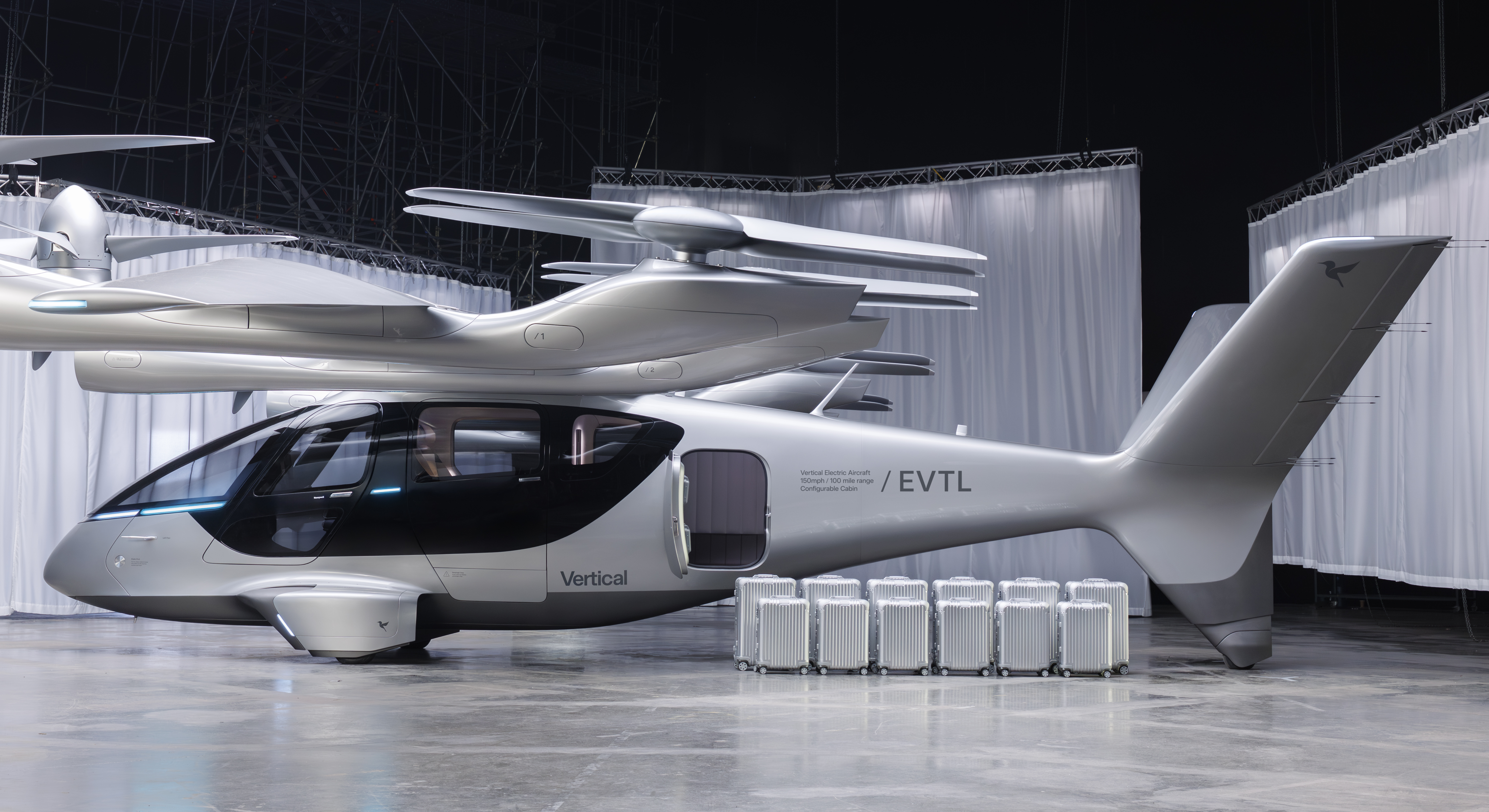
Piloted eVTOL demonstration flights in the Osaka Bay area are targeted for 2026. What operational and certification milestones must be achieved between now and then to transition from demonstrations to revenue-generating services?
We remain fully committed to the Japanese market and target to bring our aircraft prototype to Osaka Bay area to conduct piloted demonstration flights in 2026, subject to regulatory readiness and approvals.
In advance of this demonstration, we are focused on scaling execution and translating momentum into sustained commercial success.
This year we expect:
- Piloted Transition Flight in the UK– the final flight phase. This is the critical de-risk of the technology platform and marks the defining capability of eVTOL aircraft. Successful transition proves the core flight dynamics and is a fundamental technical de-risk. When completed, Vertical will be only the second eVTOL OEM in the world to conduct piloted transition flight and the first under the strict regulatory scrutiny mandated in the UK/EU.
- Completed build of our final prototype, to double our flight test capacity that will support our public demo flying efforts – such as in the Osaka Bay area, targeted for 2026. This will also serve as the prototype platform for our hybrid-electric flight tests.
- Working closely with JCAB – We have started our engagements with the JCAB to provide regular updates on our piloted transition flight test campaign, and discuss the Japan Permi-to-fly demonstration flight regime.
Your analysis suggests travel time reductions of up to 80% on key Kansai corridors. How do you see these time savings reshaping urban commuting, tourism, and large-event mobility in densely populated cities like Osaka?
We are working closely with Marubeni and other partners to develop a scalable AAM route network in Japan intended to reduce travel times by up to 80%. These travel time reductions will be totally transformative for urban commuting, tourism, and large-event mobility by taking journeys that take hours and turning them into minutes, especially when crossing the Osaka Bay region.
We see that our commercialisation roadmap in Japan could be replicable across the world, where Osaka will be a wonderful initial showcase for all of these different sectors.
The Valo is positioned as a quiet, zero-emission aircraft designed to airliner-level safety standards, while a hybrid-electric variant is also in development. How do these two platforms complement each other in terms of range, mission profiles, and airline adoption?
Vertical has developed a Valo aircraft family concept – with the all-electric to target certification in 2028, and with the hybrid-electric variant scheduled to follow in 2029. While the battery-powered aircraft is ideal for short missions (up to 100 miles), the hybrid-electric variant offers greater range/payload and mission flexibility to meet the diverse use cases and evolving needs of the Advanced Air Mobility market. The hybrid-electric variant targets to fly up to 1000 miles and carry a payload of up to 1200kg, opening up new opportunities in defence, logistics, emergency medical services, and wider commercial applications.
We believe both all-electric and its hybrid-electric variant will complement different mission end use cases. Our new customer JetSetGo, is evaluating how the hybrid-electric Valo variant could serve is Regional Air Mobility needs.
With the Japan Civil Aviation Bureau accepting Valo into its type validation programme, how significant is this regulatory progress for Japan—and could it serve as a template for certification pathways in other Asia-Pacific markets?
We are very excited to be working with the Japan Civil Aviation Bureau (JCAB), for the safe commercialisation and entry-into-service of Valo into Japan. Japan has demonstrated vision through its national AAM roadmap and real desire to make AAM a reality in Japan. We believe this will create a template for how we work with other regulators around the region. Given Valo will be certified to the highest global safety standards, we will be uniquely positioned to passport into other regions following certification.
Marubeni’s pre-delivery payments to secure early delivery slots for the first 25 aircraft from a conditional 200-aircraft order signal strong confidence. What does this level of commitment say about operator readiness and investor sentiment toward eVTOL services today?
We are at a critical stage in a burgeoning AAM industry, where the ‘hype’ has faded and those with the technical and operational readiness are emerging as industry frontrunners. Operators and investors are now able to assess the peer set across certain metrics like technology, capital efficiency, certification progress, and customer traction – all of which Vertical leads in. Confidence in the industry continues to rise and we are seeing increasing investment and operator & regulator readiness across the sector.
As airlines, infrastructure providers, and city authorities globally evaluate advanced air mobility, what is your key message to stakeholders watching Japan closely as a potential blueprint market for commercial eVTOL deployment?
Japan has always been forward leaning in terms of transport and urban mobility, and we believe that Japan is well-positioned to be of the lead adopters for AAM and eVTOLs in the world across several market use cases. Beyond the aircraft, we look forward to working with like-minded partners who share our vision to create the new AAM ecosystem – comprising air and ground infrastructure, charging solutions, as well as the aftermarket support and services for the safe EIS and scaling of AAM.
