

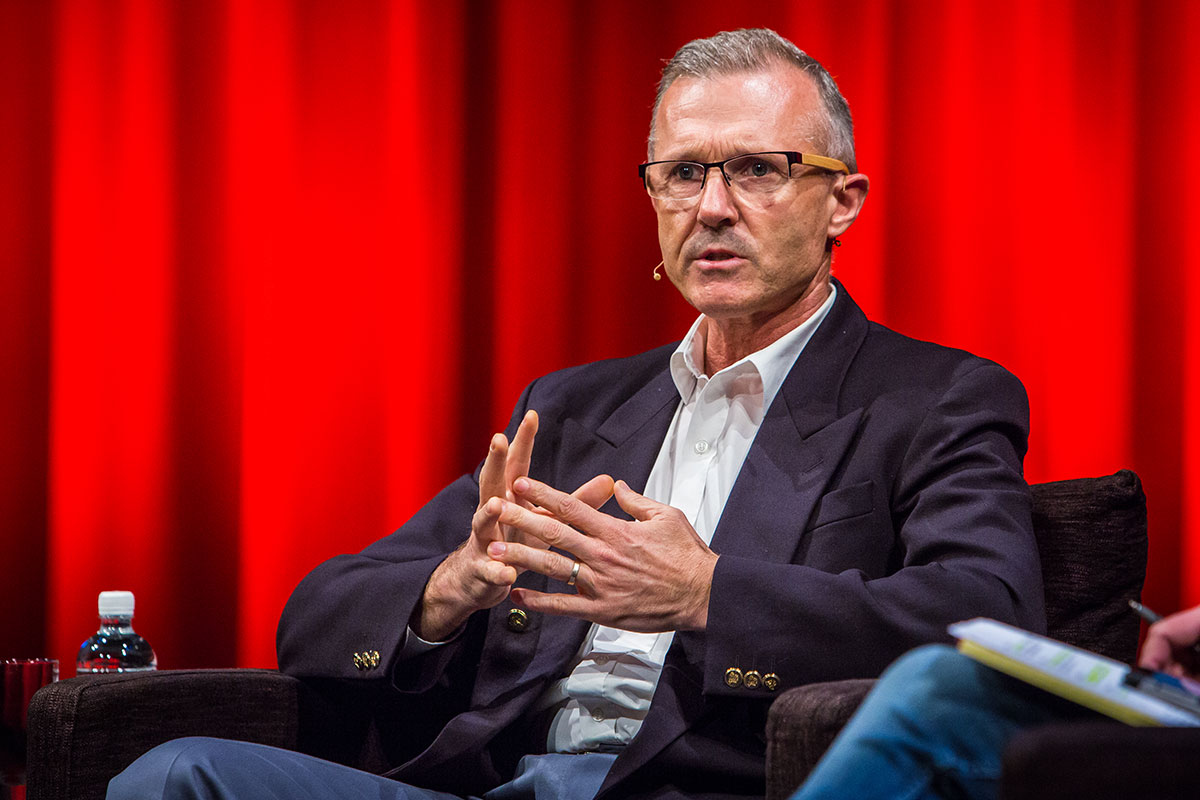
Drones World Editor Kartikeya speaks with Philip Swinsburg, Director of Asia Pacific Business Development at Wisk about autonomy certification, Boeing integration, airspace modernisation, and the future of pilotless air taxis.
Q: Congratulations on your recent demonstration. How are you accelerating Wisk’s FAA certification timeline for Gen 6 while keeping full autonomy as your core differentiator?
Thank you. One of the biggest opportunities we’ve recently secured is our participation in the FAA’s EIPP programme. That initiative is specifically designed to accelerate autonomy and explore the full potential of Advanced Air Mobility (AAM).
We’re excited to collaborate with the FAA and other stakeholders to fast-track autonomous certification. Historically, the FAA used similar mechanisms to successfully integrate drones and automation into the airspace. We aim to replicate that success through the EIPP programme for AAM.
Autonomy is our key enabler and the EIPP framework gives us a structured pathway to accelerate that safely and effectively.
Q: What is your strategy for integrating Wisk’s operations with Boeing’s resources to scale urban air mobility production?
We’re in a unique position as a wholly owned subsidiary of Boeing. That allows us to leverage their deep expertise, infrastructure, and technical competencies while still maintaining our agility.
We work closely with Boeing’s sister companies. For example, Aurora Flight Sciences has more than 100 team members embedded within Wisk. Similarly, over 100 Boeing engineers are directly integrated into our programmes. This collaboration enables faster problem-solving and access to mature aerospace processes while we continue building next-generation autonomy.
Q: Does UTM and future airspace integration play a role in this strategy?
Absolutely and that’s a critical piece.
Our sister company, SkyGrid, is a major enabler of future airspace design. SkyGrid is working with the FAA to help define new operational frameworks for autonomous aircraft.
Today, aviation operates under VFR and IFR. We believe the future will evolve toward automated flight rules. Through the EIPP programme, supported by SkyGrid, we hope to generate key learnings that contribute to broader FAA modernisation efforts.
Airspace integration is not an afterthought and it is central to autonomy deployment.
Q: You’ve experienced the full aircraft development lifecycle. How does that apply to leading a company like Wisk?
Wisk has been around for 10–12 years. In its early days, it was part of a Larry Page-backed venture within Google’s ecosystem. That gave us a strong Silicon Valley foundation with rapid innovation, prototyping, and iterative development.
In 2019, Boeing recognised that advantage and entered into a joint venture. By 2023, Boeing acquired the remaining stake, making Wisk a fully owned subsidiary.
What’s important is that Boeing deliberately allows us to preserve our innovation culture. We maintain agile teams, flat hierarchies, and an open-desk environment, our CEO sits among engineers on an open floor.
We operate within Boeing’s traditional aviation structure, but we retain the Silicon Valley mindset necessary to certify autonomy quickly and effectively.
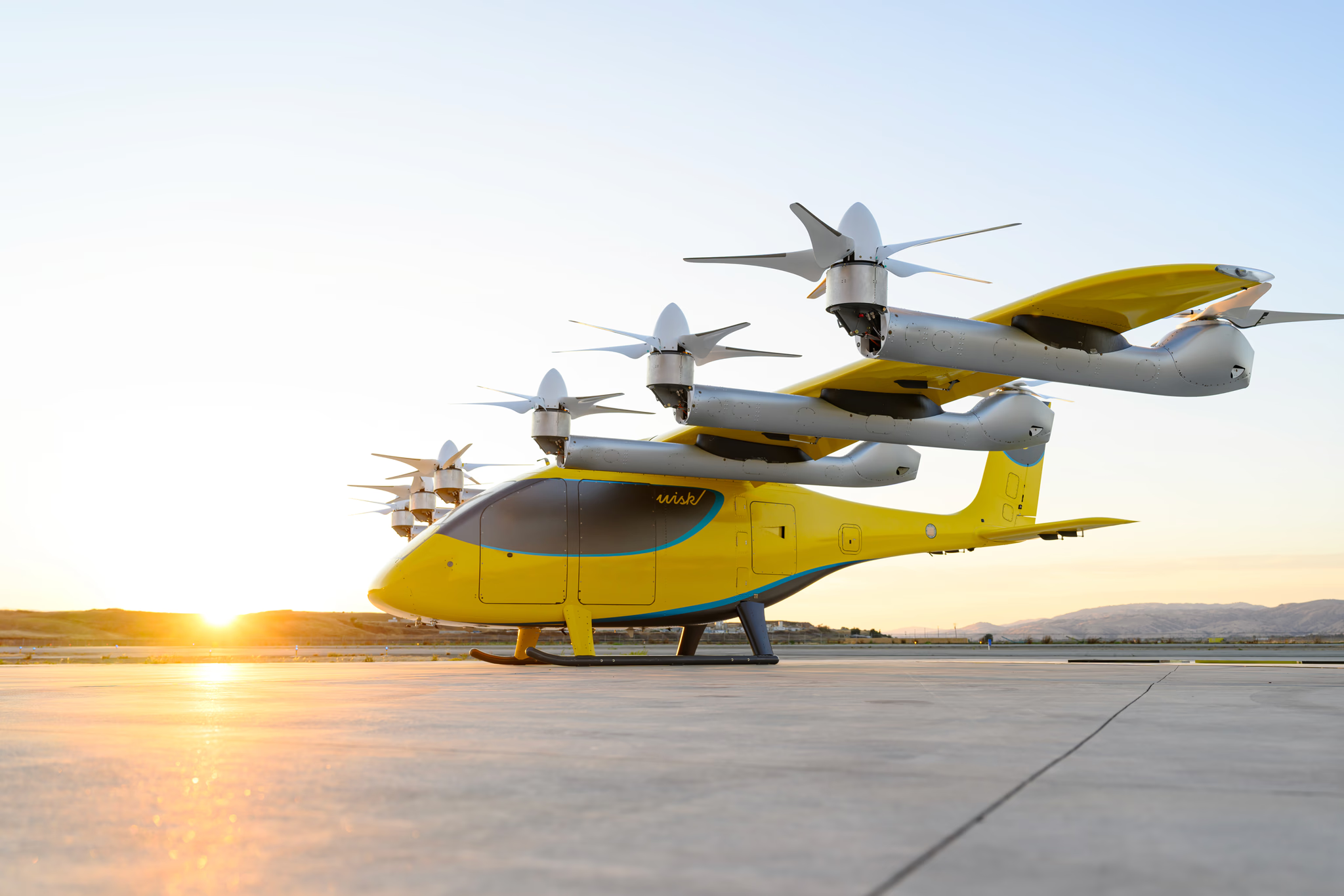
Q: How have you preserved agility while transitioning from a startup to a corporate subsidiary?
We rely heavily on a systems-based engineering approach supported by Integrated Project Teams (IPTs).
Each IPT owns its centre of excellence and has decentralised responsibility for solving its respective challenges. We empower teams to own their problem space and develop solutions independently.
These teams are then integrated by a group of chief engineers to ensure overall product cohesion.
We also have a dedicated Services IPT that looks holistically across aircraft certification, ground control systems, and operations. Since our end goal is autonomous air taxi services, that integration ensures every component, from hardware to regulatory compliance, is aligned with operational reality.
Q: What key challenges in autonomy, airspace integration, and hardware-software coordination have you overcome?
Autonomy at this level requires bringing together systems that have never previously been integrated in this way. Our aircraft relies on a sophisticated autonomy stack that combines flight computers, detect-and-avoid radar, lidar systems, cameras and multiple sensor fusion layers.
Each sensor has its own requirements and behaviours. We must validate not only the hardware and software individually but also their interaction including RF interference between systems and environmental impacts.
The real challenge lies in integrating these elements into a single, cohesive, certifiable autonomy framework. That integration process forms the backbone of our certification strategy.
Q: How do you prioritise safety while moving toward commercial launch of pilotless air taxis?
Safety is our number one priority as it should be in aviation.
We are designing the system to a 10⁻⁹ safety standard, which is equivalent to commercial airliner certification levels. Technically, operating under a Part 135 framework would not require that level. However, we have chosen to hold ourselves to the highest standard because we are building a passenger-carrying aircraft.
We are deliberately setting the bar at the highest possible certification threshold to guarantee safety, both from an engineering standpoint and from an operational perspective.
When we begin operations in the United States, we will operate under Part 135 regulations, ensuring robust regulatory oversight of both the aircraft and the organisation. That regulatory framework, combined with our engineering standards, ensures a safe and scalable autonomous air taxi service.
