
Ben Sheath – Vice President & Managing Director, UK & Ireland – Siemens Digital Industries Software
In this exclusive interview with Kartikeya, Editor, Drones World Magazine, Ben Sheath explains how Digital Twins, Industrial AI, and the connected digital thread are transforming UAV design, certification, manufacturing, and autonomous operations—accelerating the future of unmanned aviation.
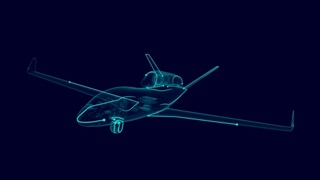
Siemens is showcasing a search-and-rescue drone at Farnborough to demonstrate the Digital Twin. How is digital engineering changing the way next-generation UAVs are designed, tested, and certified?
Drone manufacturers are under pressure to move faster, scale production, and reduce risk all at the same time. Siemens enables a connected digital backbone for them, linking engineering, manufacturing, and operations through simulation, data, and Industrial AI, allowing them to connect the whole lifecycle and increase collaboration.
- On the design side, the comprehensive Digital Twin means engineers can explore more design alternatives virtually – optimising aerodynamics, structural integrity, and system integration – before committing to physical prototypes. This dramatically compresses development timelines and reduces costly late-stage changes.
- For testing, high-fidelity simulation allows teams to validate performance across thousands of scenarios – from extreme weather conditions to mission-critical failure modes – that would be impractical, dangerous, or prohibitively expensive to replicate physically. This shifts the paradigm from “build and test” to “simulate, predict, and verify.”
- When it comes to certification, this is where the digital thread becomes a true game-changer. Regulatory bodies like EASA and the FAA are increasingly open to accepting simulation-based evidence alongside traditional physical test data as part of the certification process. A comprehensive Digital Twin creates a traceable, auditable record of every design decision, every simulation result, and every requirement – building what’s essentially a digital certification package. This not only accelerates time-to-certification but also makes it easier to demonstrate compliance when designs evolve or new variants are introduced, because the digital thread preserves full traceability from requirement to verification.
This is what is really changing the game in the UAV industry. Decisions are no longer isolated – they are informed, connected, and continuous. This is how teams move faster with confidence and stay ahead of the competition.
Industrial AI is becoming a key enabler for autonomous aviation. How do you see AI improving drone performance, mission planning, predictive maintenance, and operational safety?
Industrial AI is a force multiplier across the entire UAV lifecycle – not just in flight, but long before a drone ever leaves the ground.
- In design, AI enables the AI-driven identification of design risks and failure scenarios early in development – detecting structural, thermal, or software weaknesses when changes are still fast and inexpensive. This shifts the approach from reactive problem-solving to proactive risk elimination.
- For performance and mission planning, AI optimises flight paths in real time, adapting to weather, terrain, and mission priorities. In search-and-rescue, for example, it can dynamically re-prioritise search zones based on live sensor data – where every second counts.
- On predictive maintenance, AI learns from fleet-wide sensor data to flag component degradation before failures occur, keeping drones mission-ready and reducing unplanned downtime.
- For safety and certification, the combination of AI-driven risk analysis and a comprehensive Digital Twin creates auditable proof of safety for faster approval and certification – giving regulators a traceable, defensible safety case across edge cases and failure modes.
AI isn’t replacing human expertise – it’s augmenting it, giving engineers, operators, and regulators the confidence to move faster without compromising safety.
Drone manufacturers are under pressure to reduce development time while improving reliability. How does the Siemens Xcelerator portfolio help UAV developers accelerate innovation from concept to deployment?
Siemens Xcelerator is the most comprehensive industry software portfolio. Combining multidisciplinary simulation, AI, and the Digital Twin, it creates auditable proof of safety – reducing risk and accelerating certification. We support our customers throughout their entire journey by connecting engineering, manufacturing, and sustainment in a single digital thread.
- In engineering, customers use AI and the Digital Twin to design, simulate, and validate a safe, mission-ready drone – exploring more design alternatives in less time and catching issues before they become costly.
- In manufacturing, they can ramp up production, quickly resolve issues, and ensure programmes remain on schedule.
- In sustainment, they can predict failures, coordinate maintenance, and maximise fleet readiness.
This unified digital thread across disciplines is what truly accelerates innovation – it eliminates the handoff gaps that traditionally slow development down, giving UAV developers both the speed and the reliability confidence they need to stay competitive.
“The Digital Twin doesn’t just validate performance once—it continuously ensures reliability from first design to every mission flown.”
Search-and-rescue missions demand highly reliable autonomous systems. How can Digital Twin technology help drone manufacturers validate performance before aircraft enter real-world operations?
The journey begins with designing a Search & Rescue drone capable of operating safely in contested environments. This is where the Digital Twin delivers its greatest value before a single aircraft is built. Engineers can simulate thousands of mission scenarios – extreme weather, GPS-denied environments, obstacle-rich terrain – validating autonomous decision-making, structural resilience, and sensor performance entirely in the virtual world. Combined with AI-driven identification of design risks and failure scenarios, this creates auditable proof of safety that reduces risk and accelerates certification.
But validation doesn’t stop at design. During production, when a critical PCB failure threatens delivery, Siemens uses AI-powered Digital Twin Composer to identify the root cause, evaluate recovery scenarios, and orchestrate the optimal production plan to minimise disruption.
Once deployed, the drone continuously streams operational data back into the digital twin. Siemens Intelligence Center X detects an impending gimbal failure before it impacts a mission. AI agents recommend an approved upgrade path, coordinate parts and technician scheduling, and help keep the fleet mission-ready.
This is the power of the Digital Twin – it doesn’t just validate performance once, it continuously ensures reliability from first design to every mission flown.
As UAV platforms become more complex, collaboration across design, manufacturing, and operations is increasingly important. How does Siemens enable a connected digital thread throughout the entire drone lifecycle?
As UAV platforms grow in complexity, the biggest challenge isn’t any single phase – it’s the gaps between them. Siemens enables a connected digital thread that links requirements, design, manufacturing, and sustainment in a single, continuous data backbone.
In design, multidisciplinary teams work from a shared Digital Twin, ensuring that aerodynamic, structural, electronic, and software engineering decisions are connected from the start – not reconciled later.
In manufacturing, that same digital thread carries validated design intent straight to the production floor, taking the supply chain into consideration, enabling faster ramp-up and real-time issue resolution without losing traceability.
In sustainment, live fleet data flows back into the Digital Twin, informing maintenance decisions, driving continuous improvement, and feeding insights into the next generation of design.
This closed-loop continuity is what sets the Siemens approach apart – no handoff gaps, no data silos, just one connected thread from first concept to every mission flown. It is now possible to predict the impact of any decision taken at any stage of the lifecycle on all the other stages. This prevents situations where an apparently optimal engineering solution makes maintenance more complex and expensive, for example.
Many drone companies are scaling production to meet growing defence and commercial demand. What role do digital manufacturing and AI play in helping UAV manufacturers improve quality while increasing production capacity?
Scaling UAV production without compromising quality is one of the biggest challenges drone manufacturers face today. Digital manufacturing and AI make this possible by connecting the production floor to the Digital Twin.
AI-powered simulation allows manufacturers to optimise production lines virtually – testing layouts, workflows, and capacity scenarios before committing to physical changes. When issues arise during production, AI rapidly identifies root causes and recommends recovery plans, minimising disruption and keeping programmes on schedule.
At the same time, real-time quality monitoring driven by AI catches deviations early, ensuring every unit meets specification – even as production rates increase. The result is a manufacturing operation that scales with confidence: higher throughput, consistent quality, and full traceability from every component back to its Digital Twin.
Looking ahead, what emerging technologies do you believe will have the greatest impact on the future of autonomous drones, and how is Siemens helping shape that next generation of unmanned aviation?
In my view, three technologies will reshape autonomous drones most profoundly: Industrial AI, the comprehensive Digital Twin, and edge computing.
Industrial AI will move drones from pre-programmed autonomy to truly adaptive decision-making – aircraft that learn, respond, and optimise in real time. The Digital Twin will evolve from a design tool into a living, continuously updated replica that spans the full lifecycle, enabling certification by simulation and continuous airworthiness. Edge computing will push AI processing onboard, enabling faster autonomous decisions in GPS-denied or communications-degraded environments – critical for both defence and search-and-rescue missions.
Siemens is uniquely positioned to shape this future because we don’t just offer point solutions – we provide the connected digital thread and the most comprehensive industry software portfolio that ties all of these technologies together, from concept through to mission, based on an open architecture. That’s how we’re helping our customers build the next generation of unmanned aviation – faster, safer, and smarter.
