

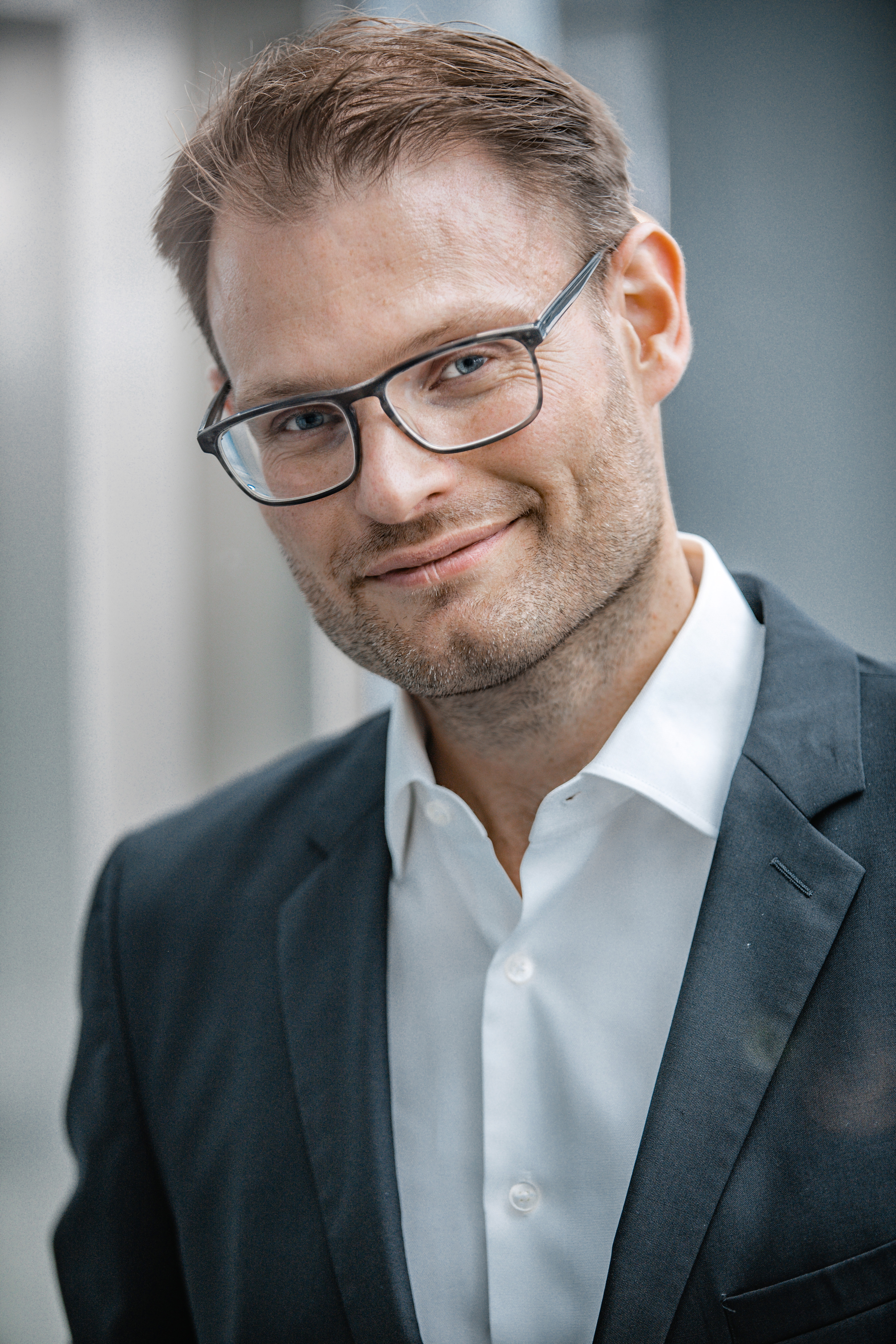
Jan-Hendrik Boelens – Founder and CEO, Alpine Eagle
Alpine Eagle has rapidly emerged as one of Europe’s leading counter-drone innovators. What market gap did you identify, and how is your Sentinel system redefining modern air defence against evolving drone threats?
Modern drone threats demand an integrated approach. Effective air defence now depends on bringing together sensing, decision-making and interception into a single operational system that gives operators the information and time they need to respond.
Most legacy air-defence systems were designed around larger, higher-value threats, but today’s operational environment is very different. Low-cost drones are deployed in large numbers, fly at low altitude and evolve continuously. Countering that requires much earlier detection, better situational awareness and faster decision-making.
That’s why we’ve built Sentinel as a software-defined system-of-systems. Sentinel-OS connects airborne and ground-based radar, distributed sensors and multiple effectors into a single operational picture, helping operators detect, classify, prioritise and respond to threats more effectively. Rather than replacing existing systems, we integrate with them, giving customers a flexible foundation that can evolve as operational requirements and technologies change.
Operational trials in Ukraine have provided invaluable real-world insights into drone warfare. What are the most significant lessons Alpine Eagle has learned, and how have they influenced your technology development?
Ukraine has reinforced something many in defence already suspected: innovation cycles have been fundamentally transformed. Capabilities are being tested, adapted and improved in weeks rather than years because the threat changes so quickly. As a result, this has changed how we develop products.
It’s also reinforced the importance of adaptability. Technologies that perform well today may need to evolve within weeks as adversaries change their tactics. That means developing software and hardware that can be updated rapidly, tested continuously and refined using operational feedback.
Ultimately, the biggest lesson is that systems must perform in real conditions, not just during controlled demonstrations.
The proliferation of low-cost drones is forcing militaries to rethink traditional air-defence architectures. How do you see counter-UAS strategies evolving over the next five years?
We’re already seeing a shift from standalone products towards integrated architectures. Future counter-drone capability will be layered, distributed and software-defined. Different sensors and effectors will work together across multiple domains, allowing operators to select the most appropriate response depending on the threat.
Equally important is defence economics. Ukraine has shown that low-cost drones can have a disproportionate operational impact, while recent events in the Middle East have highlighted the cost of defending against mass drone attacks with expensive interceptor missiles. Those lessons reinforce the need for layered defence, earlier detection and a broader range of response options, allowing operators to match the right effect to the right threat rather than relying on a single, high-cost interceptor.
Over the next few years, the emphasis will increasingly be on decision superiority, giving operators more time, better information and greater flexibility.
Defence procurement cycles have traditionally been lengthy, yet drone threats evolve almost daily. How can governments accelerate the adoption of innovative counter-drone solutions while maintaining rigorous standards and interoperability?
Governments need procurement models that support iterative development, continuous testing and faster operational feedback. That means engaging innovative companies earlier, evaluating systems in realistic operational environments and adopting capabilities that can evolve alongside the threat.
Interoperability is equally important. Systems designed around open standards are much easier to upgrade over time, allowing governments to introduce new sensors, effectors and software capabilities without replacing entire programmes every time the threat evolves.
If institutions want to get ahead of threats, they need to treat capability development as a continuous process, working closely with innovative companies and operational users to rapidly test, refine and deploy new technology.
“Success increasingly depends on the ability to move rapidly from development to deployment while maintaining the quality and reliability that defence customers expect.”
Alpine Eagle has expanded into the UK, secured customers across Europe, and formed strategic partnerships with DeltaQuad and Origin Robotics. How important are international collaborations in building an integrated European counter-UAS ecosystem?
They’re absolutely essential.
No single company will solve the counter-drone challenge alone. The pace of technological change means the industry needs to combine specialist capabilities rather than build everything independently.
Our partnerships reflect that philosophy. DeltaQuad provides proven airborne platforms, Origin Robotics brings autonomous interception through BLAZE, and we’ve expanded our sensing capability with ground-based radar alongside our airborne systems.
Working with specialist partners allows us to bring complementary technologies together much faster than any one company could develop them independently. That’s good for our customers, but it’s also good for Europe’s defence industrial base because it strengthens sovereign capability across multiple countries.
Scaling production is becoming as important as technological innovation. What are the biggest challenges in rapidly manufacturing and deploying counter-drone systems to meet growing defence demand?
The biggest challenge is maintaining speed without sacrificing quality or interoperability. Defence customers need reliable systems, but they also need them delivered at a pace that matches the constantly evolving threat.
That’s why collaboration has become so important. Companies that can integrate proven technologies from across the defence ecosystem will be far better placed to scale than those trying to develop every component independently.
Rather than trying to manufacture every component ourselves, we’ve focused on integrating best-in-class technologies from trusted partners. That allows us to scale more quickly while remaining flexible as new capabilities emerge.
Equally important is ensuring that manufacturing keeps pace with operational demand. Success increasingly depends on the ability to move rapidly from development to deployment while maintaining the quality and reliability that defence customers expect.
Artificial intelligence is increasingly central to drone detection, tracking, and interception. How is Alpine Eagle leveraging AI to improve decision-making, reduce operator workload, and counter increasingly autonomous aerial threats?
AI is fundamental to helping operators manage increasingly complex airspace. Our goal is always to support human decision-making with AI, not replace it. Sentinel-OS uses AI to fuse data from multiple sensors, classify potential threats, reduce false positives and present operators with a much clearer operational picture.
As drone numbers continue to increase, no operator will be able to manually process every piece of information. AI helps prioritise threats, automate routine tasks and accelerate decision-making while keeping humans firmly in control of the engagement. As autonomous systems become more prevalent, AI will play an increasingly important role in helping operators maintain situational awareness and respond at the speed modern operations demand.
As the counter-UAS market continues to evolve, what is Alpine Eagle’s long-term vision, and where do you see the company contributing to the future of European and global air defence?
Our long-term vision is to help build a more connected and resilient approach to air defence across Europe and its allies.
We see software as the enabler that allows new sensing technologies, autonomous systems and effectors to work together without locking customers into a single vendor or capability.
More broadly, we want to help strengthen Europe’s sovereign defence capability by working alongside governments and industry partners to build deployable, scalable systems that can evolve as quickly as the threats they are designed to counter.
The future of air defence will be defined by how quickly new technologies can be integrated, deployed and adapted in response to changing threats. We want Alpine Eagle to be at the centre of that evolution, helping armed forces build capabilities that remain effective not just today, but for the conflicts of tomorrow.
