

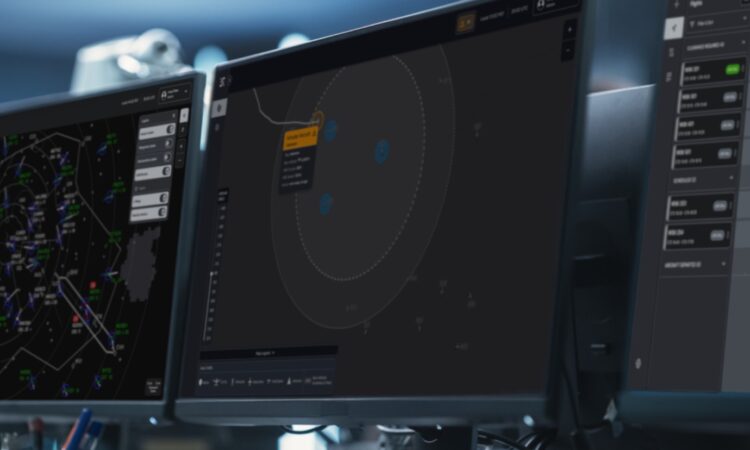
SkyGrid and Texas A&M Engineering Experiment Station are partnering on a research project aimed at improving cooperative separation management for Advanced Air Mobility (AAM) traffic under a programme supported by the Federal Aviation Administration (FAA). The initiative focuses on developing technologies and operational concepts that enable safe and efficient spacing and conflict resolution among diverse aircraft — including drones, air taxis and other unmanned or piloted vehicles — as airspace becomes more crowded with new entrants.
The collaboration will evaluate algorithms, communications protocols and decision support tools that allow multiple aircraft to share airspace while maintaining safe separation distances, even when operating beyond traditional visual line of sight. This cooperative separation approach is expected to be essential as AAM operations scale, requiring more autonomous coordination between vehicles and with ground-based traffic management systems.
SkyGrid’s expertise in airspace data platforms and autonomous traffic management will be combined with Texas A&M’s research capabilities in aerospace systems and control theory to conduct simulations, prototype developments and real-world concept demonstrations. The research aims to address emerging challenges associated with mixed traffic environments, where manned aircraft, delivery drones and passenger-carrying AAM vehicles may operate concurrently across urban and regional corridors.
As Advanced Air Mobility evolves, cooperative separation methods are being investigated as a way to move beyond traditional air traffic control paradigms, which rely heavily on centralized oversight. Instead, the new concepts focus on distributed decision-making, interoperability between onboard and ground systems, and robust fail-safe measures that ensure safety even in complex or congested conditions.
The FAA programme supporting this work underscores regulators’ interest in enabling future aviation frameworks that accommodate new types of vehicles and flight operations without compromising safety. By studying cooperative approaches, the research aims to provide insights into both the technical requirements and operational procedures needed for scalable AAM traffic management.
Industry stakeholders view such research as critical for unlocking the potential of AAM services — from on-demand passenger flights to automated cargo deliveries — which will require sophisticated coordination tools as airspace use diversifies. The partnership between SkyGrid and Texas A&M represents a step toward building the foundational technologies and standards that could underpin next-generation separation assurance systems in advanced aviation environments.
