
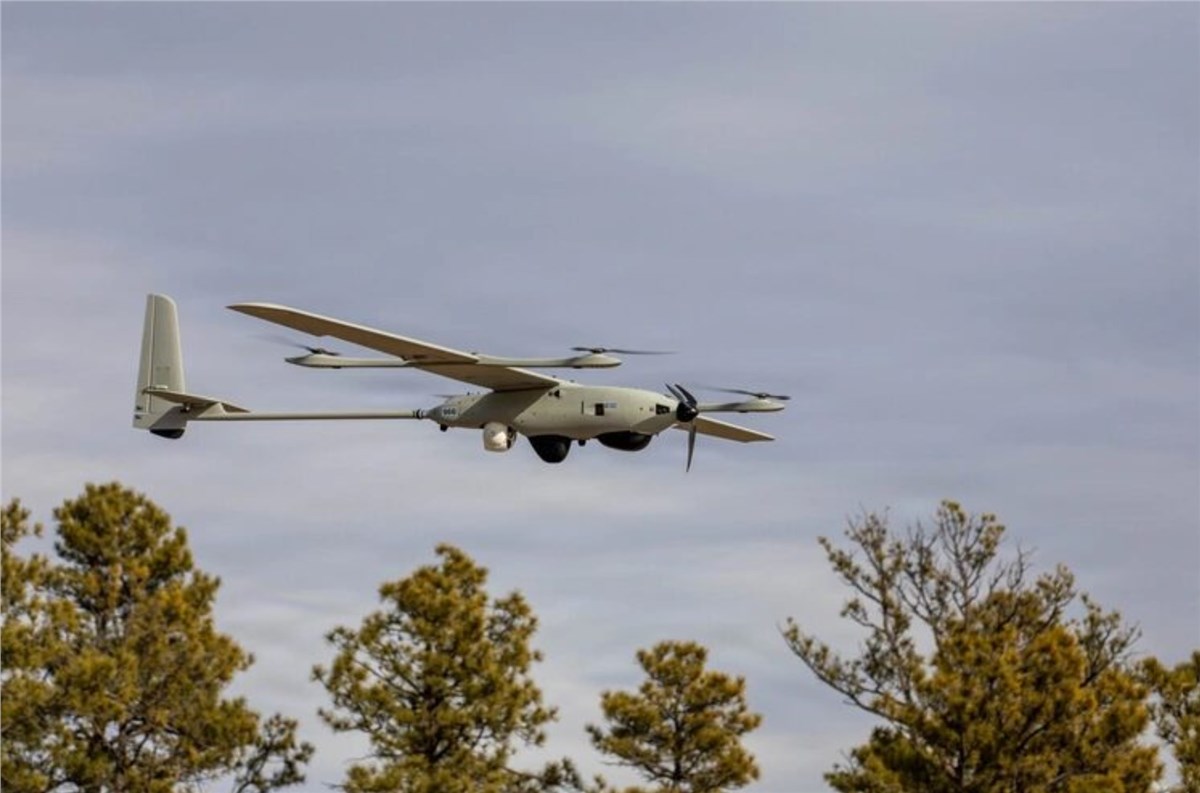
The Redwire Stalker UAS has proven itself as a vital asset for U.S. Army programs, from training soldiers at the U.S. Army Aviation Center of Excellence (USAACE) to supporting the Long-Range Reconnaissance (LRR) contract for enhanced surveillance and target acquisition. As a combat-proven system, Stalker has enabled numerous missions worldwide.
Built on a Modular Open Systems Approach (MOSA), the Stalker showcased its ability to integrate quickly and efficiently during the U.S. Army’s recent Ivy Sting IV exercise with the 4th Infantry Division at Fort Carson, Colorado. As a modular Group 2 Uncrewed Aircraft System (UAS), Redwire’s Stalker demonstrated seamless integration with the Army’s Next Generation Command and Control (NGC2) tactical network. Beyond flight capability, it populated the network as a native, discoverable node, delivering real-time position location information and full motion video across the entire NGC2 ecosystem.
NGC2 integration is a cornerstone of the Ivy Sting exercise series. The network automatically recognized the Stalker asset as soon as it entered the mesh, requiring minimal manual configuration. By anticipating the Army’s transition from legacy systems to NGC2, Redwire proactively supports this critical customer in achieving the Pentagon’s top communications priority: increased data throughput via a fully encrypted network, empowering leaders to make faster, more secure intelligence-driven decisions.
Joshua Stinson, Chief Growth Officer at Redwire Defense Tech, stated: “As the only fixed-wing VTOL to support this exercise, the Stalker’s deployment at Ivy Sting demonstrates how the aircraft’s modularity results in ease of integration with multiple Army networks. The Stalker’s endurance, advanced capabilities, and maturity allow it to fulfill brigade level tasks normally covered by Group 3 aircraft—but with a much smaller logistics footprint.”
Redwire’s Flight Operations team has participated in the entire Ivy Sting exercise series, working with over 6,000 4th Infantry Division soldiers over several months. During Ivy Sting IV, the Stalker populated directly into a Stryker Infantry Carrier Vehicle to demonstrate its intelligence, surveillance, and reconnaissance (ISR) capabilities, including providing immediate battle damage assessment through full-motion video.
