

Drones World Editor Kartikeya In Conversation with Mr. Richard Lowe, Chief Technical Officer at Satellite Applications Catapult.
- How does CAA designation de-risk investment and accelerate commercial drone deployment timelines?
Becoming a recognised test site, enables drone companies to expedite (otherwise a lengthy and cost prohibitive) testing processes. Reducing risk in test and evaluation, speeding up their SORA application process and therefore reducing time to market deployment.
- What specific satellite-dependent capabilities can you test at Drone Test and Development Centre (DTDC) that others can’t?
The Satellite Applications Catapult has various facilities based at Westcott, including the Future Networks Development Centre (FNDC) which enables extended satellite communications. Alongside the Catapult expertise in Ubiquitous Communications (UC) and Position Navigation and Time (PNT), this means companies can gain access to facilities and expertise to integrate space enabled services on their platforms; key enablers to commercial BVLOS flying.
- Is the Catapult building a proprietary data repository from all these tests, and who owns this valuable data?
The Satellite Applications Catapult is here to enable sector growth, therefore all IP and data belongs to our customers – the end users of the Drone Test and Development Centre (DTDC).
- How will you synchronize operations with partners like WholeShip to create a true national testing network?
Recognised Test Sites enable drone companies to seek the most appropriate testing environment for their needs. Satellite Applications Catapult and Wholeship, as well as other sites in the UK are looking to align and offer complementary capability, bringing a mutually supportive offer to the UAS industry.
- Beyond regulation and tech, what’s the most underestimated bottleneck to scaling drone operations?
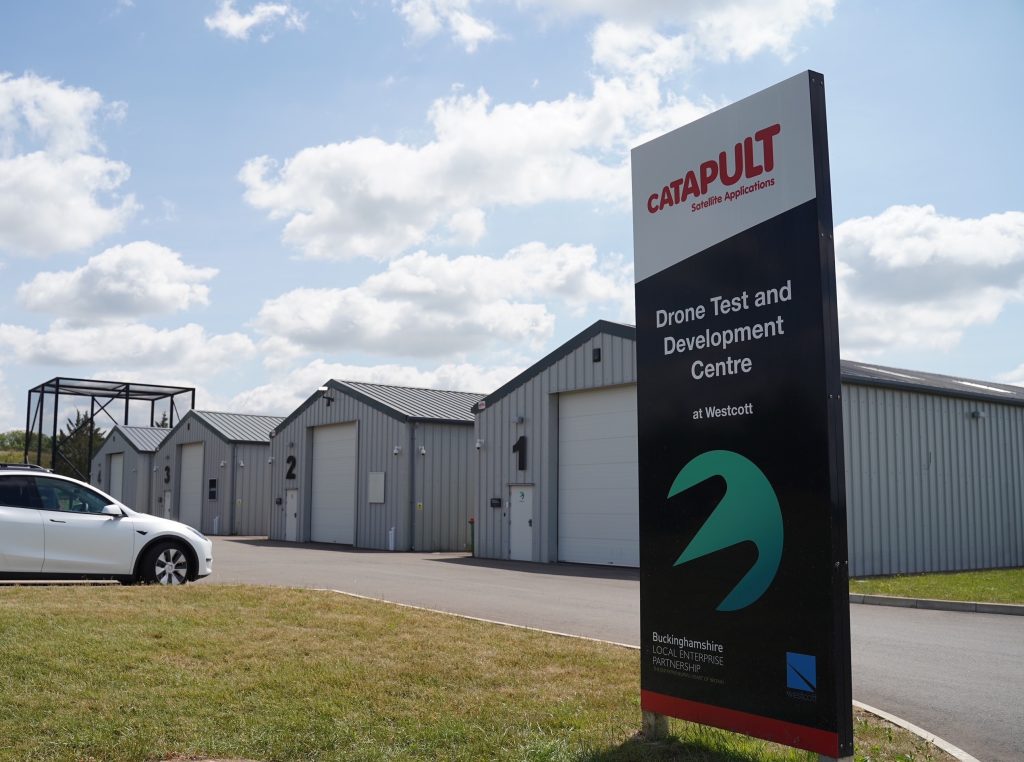
Lack of neutrally operated repeatable testing environments (alongside the lack of CAA pre-assessed Test Sites) have historically been a primary challenge for the sector, responding to this challenge has led us to create the Drone Test and Development Centre. For companies scaling their operations, the biggest factor alongside cost and time, is the inability to prove safe operations ahead of licencing. We feel our drone centre addresses this barrier.
- What’s the UK’s defensible competitive advantage in the global drone race through facilities like DTDC?
The DTDC speeds up the innovation process, giving UK companies a competitive advantage. We hope to continue working with the CAA and others to develop this further and ensure the UK’s UAS industry can thrive.
- What single metric will define DTDC’s success in 5 years?
Growth: A thriving UK sovereign UAS Industry, using satellite technology, to offer world-beating products and services
