
Drones World Editor Kartikeya In Conversation with Mr. Kent Wilson ,CEO, Dynamic Aerospace Systems(DAS)
How does your “dual-use” strategy for platforms like the G-1 Hybrid VTOL, serving both defense and commercial markets, give DAS a unique advantage?
In emerging markets like the drone industry, partnering with a strong military entity is advantageous, as it provides a reliable and dedicated buyer and user for a company’s products. However, integrating this with commercial applications can drive long-term growth and, in some cases, unlock a significantly larger market beyond military use. Take Boeing as an example: the 737 serves civilian purposes, while the P-8 Poseidon, a military variant based on the same 737 platform, meets U.S. Navy needs.
Beyond longer flight time, what specific military problem did your hybrid-electric drone solve in the recent U.S. Air Force Global Strike Command demonstration?
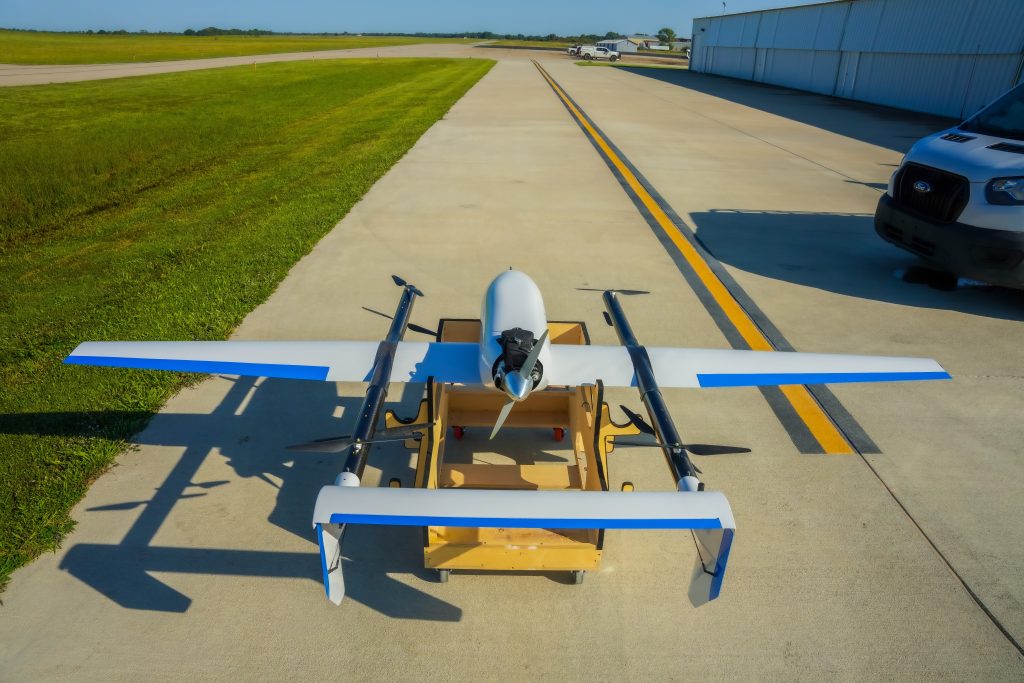
The hybrid-electric G1-MKII/Overwatch drone, demonstrated on September 25, 2025, at Strother Field in Kansas, outside of long duration, addresses the challenge of accessing remote or difficult locations for surveillance and reconnaissance without requiring traditional runways or extensive infrastructure, thanks to its VTOL capabilities and payload versatility. This enables rapid deployment in austere environments, supporting missions like persistent overwatch and real-time data delivery for the U.S. Air Force Global Strike Command. The G1/Overwatch is also capable of working simultaneously with DAS’s other drones, like the US-1/Sentintel and Mitigator/Breacher.
Why is producing an “American Made,” government-grade drone line like the Fortis Series so critical for your defense and security customers?
Producing an American-made, government-grade drone line like the Fortis Series is critical for defense and security customers because it ensures compliance with U.S. regulations such as NDAA and DoD cybersecurity standards, reduces reliance on foreign supply chains that could pose security risks, and provides cyber-secure, NATO-interoperable systems. This translates into a reduction in reliance on overseas manufacturers amid the Pentagon shift away from non-U.S. drones, and ensures US standards for data encryption and secure operations in contested environments, and supports domestic innovation for missions such as ISR, force protection, and battlefield resupply.
What has been the biggest challenge in establishing international autonomous delivery corridors in the UAE and Greece, and what’s the next key milestone?
As in any country, the biggest challenge in establishing international autonomous delivery corridors in the UAE and Greece has been navigating regulatory compliance and integrating drone systems with local aviation authorities and infrastructure. We are taking a phased approval approach with the UAE’s Dubai Civil Aviation Authority (DCAA) and also working with our partner Drops Smart Hubs to access their droneport networks in Greece when they are completed. The next key milestone for the UAE is demonstrating the US-1 Drone in Q1 2026 for Noon Fulfillment and the DCAA. For Drops Smart Hubs in Greece, it involves conducting a feasibility study for system integration and launching collaborative pilot programs.
As autonomy advances, how is the role of the human operator in your systems evolving, especially for complex ISR and logistics missions?
As we demonstrated at Strother Field Airport in Winfield Kansas, the role of the human operator is shifting from direct control to supervisory oversight and high-level decision-making, particularly for complex ISR and logistics missions. Operators focus on mission planning, real-time intervention in ambiguous scenarios, and data analysis, while drones handle autonomous navigation, mesh networking, auto-landing, and GPS-denied operations to improve efficiency and reduce risk in challenging environments.
How will a potential NYSE listing in 2026 directly accelerate your technology development and market expansion?
A potential NYSE listing in 2026 (targeting Q1 under reserved ticker ‘DAS’) would directly accelerate technology development. This would provide greater capital for research and development (R&D), expand the patent portfolio (for example, patents on battery-integrated airframes, aircraft structures with built-in battery technology and mesh delivery systems networks of unmanned vehicles working collaboratively), and fund advancements in autonomy (self-piloting systems) and BVLOS (Beyond Visual Line of Sight) operations. For market expansion, it would enhance credibility, attract partnerships, scale U.S. manufacturing, and diversify revenue through government contracts and international MOUs (Memoranda of Understanding), such as those in the UAE and Greece.
Looking ahead, what single technological shift will be most transformative for drones, and how is DAS preparing for it?
The most transformative shift for drones will be widespread AI-driven autonomy. This will allow seamless swarm coordination (multiple drones working together), real-time decisions, and less human input for missions such as intelligence, surveillance, and reconnaissance (ISR) and logistics. DAS is preparing by developing robust Fortis Series autonomous capabilities, including mesh networking (interconnected drone communication), dynamic routing (routes that adapt in real time), and modular payloads (easily interchangeable equipment). DAS is also pursuing FAA Beyond Visual Line of Sight (BVLOS) certifications and investing in patents for sensor-agnostic architectures (systems that work with many sensor types) to ensure interoperability and resilience.
