

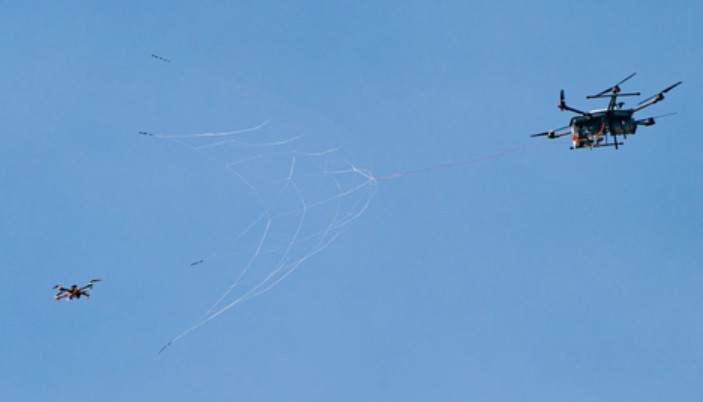
Fortem Technologies has been selected to deploy its DroneHunter® counter-unmanned aircraft systems to protect U.S. venues during the 2026 FIFA World Cup. The deployment forms part of a broader homeland security effort to safeguard one of the world’s largest sporting events from unauthorized drone activity.
The 2026 tournament, co-hosted by the United States, Canada and Mexico, is expected to draw millions of spectators across multiple U.S. cities. With large crowds and global media attention, security planners have identified small unmanned aerial systems as a growing risk, whether for surveillance, disruption or malicious intent. As a result, advanced counter-drone capabilities are being integrated into venue protection strategies.
Fortem’s DroneHunter system is a net-based autonomous interceptor designed to capture rogue drones in mid-air rather than destroy them with explosive force. The platform works in coordination with radar detection and command-and-control software to identify, track and safely intercept unauthorized drones above protected areas. This net-capture approach is particularly suited to crowded environments where debris or collateral damage must be avoided.
The deployment includes ground-based radar units to provide continuous airspace monitoring, along with autonomous interceptor drones capable of engaging aerial threats rapidly. The integrated system offers layered defence, combining detection, tracking and mitigation within a single operational framework.
Fortem has previously supported major international events with its counter-UAS technology, and the upcoming World Cup deployment represents another high-profile application of its systems. The selection highlights growing reliance on autonomous, precision-based counter-drone solutions for securing stadiums and large public gatherings.
As drone accessibility and capabilities continue to expand globally, event security strategies are evolving to address airborne risks alongside traditional ground-based threats. The integration of DroneHunter systems at World Cup venues underscores the increasing importance of proactive airspace management in protecting critical infrastructure and ensuring public safety during globally significant events.
