

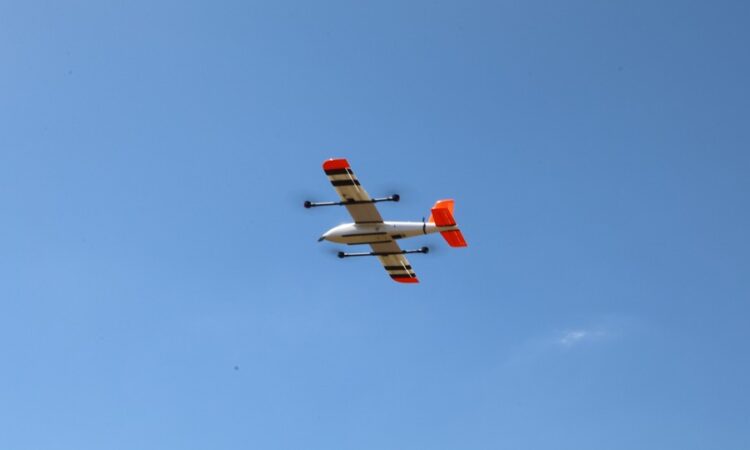
A series of beyond visual line of sight (BVLOS) medical delivery trials conducted by Skylift has bolstered plans by the Civil Aviation Authority for an integrated low-altitude airspace framework in the United Kingdom. The trials, focused on transporting medical supplies across operationally challenging routes, demonstrate practical progress toward routine BVLOS operations that mesh safely with existing air traffic and ground infrastructure.
Skylift’s programme involved unmanned flights that delivered critical healthcare payloads over distances and terrain that would typically require time-consuming ground transport. These missions were executed in collaboration with healthcare partners and airspace stakeholders, providing data on route management, risk mitigation, and end-to-end operational robustness. By validating real-world procedures and safety cases, the flights have contributed important operational evidence to support regulatory planning.
The UK CAA has been advancing proposals for an integrated airspace system that would enable higher volumes of diverse air traffic—including crewed aircraft, drones, and advanced air mobility vehicles—to coexist under unified traffic management and separation standards. Skylift’s trials align with this vision by showing that disciplined BVLOS operations can be executed in controlled environments without compromising safety or efficiency.
Key lessons from the medical delivery flights include refined procedures for pre-flight planning, detect-and-avoid systems performance, and communication protocols. Stakeholders noted that establishing clear pathways for data sharing and flight authorisation will be essential as BVLOS operations scale.
Regulators and industry participants see these trials as a crucial step toward operationalising the CAA’s integrated airspace concept. They help highlight practical considerations, such as risk profiles, airspace segmentation, and collaborative oversight, that will shape policy and technical standards for future unmanned operations across the UK.
